

Have you ever found yourself lighting that same cigarette again, even when you swore you wouldn’t?
Our quit smoking program member Tim Heronemus from Kansas, did, for 50 years. What started as a teenage curiosity became an addiction that clawed its way into Tim’s mind and routine. Every time he tried to quit, he’d end up back smoking.
Tim wanted to be free and stop the progression of his COPD. But something was sabotaging him in the background.
FEAR
Fear that’s present in every smoker’s mind:
- We don’t enjoy smoking, we’re afraid of not enjoying life without it.
- We don’t love smoking, we’re afraid of failing, and then loving ourselves a little less.
- We don’t miss the habit, we’re afraid of the unknown.
Tim ended up breaking his 50-year addiction and he’s a very inspiring member in our community. He said, “I turned my love for smoking into some of the missing love for myself, my health and my family. I now see that overcoming the mental addiction was the key to quitting and staying quit. I am free.”
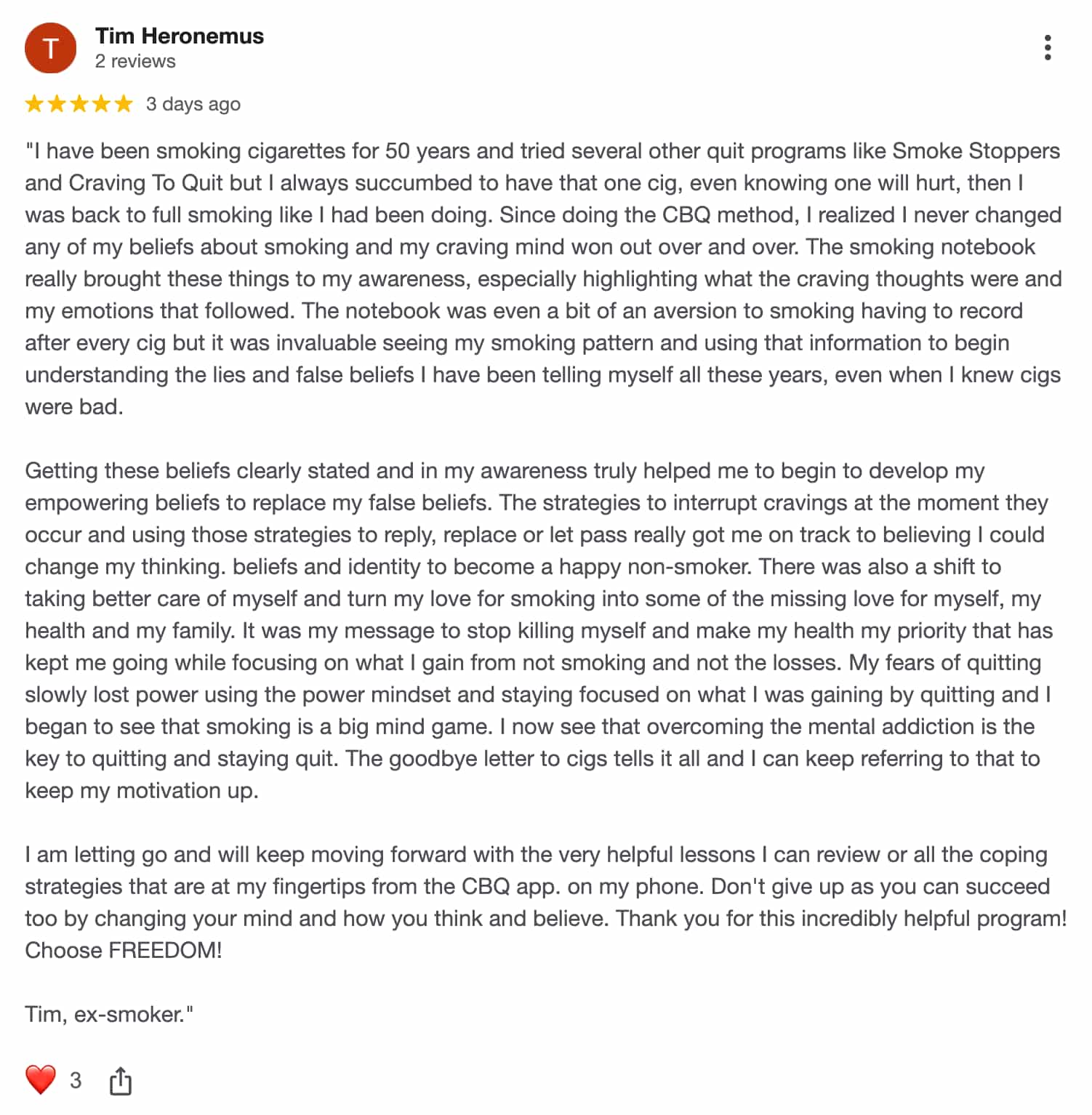
But Tim wouldn’t have been able to follow the CBQ process had he not first addressed his fears.
Our fears of quitting smoking come from our past experiences of failure and pain. They’re like heavy baggage we’re dragging around non-stop. They may be invisible to the naked eye, but their weight is enough to bring us to our knees and make us feel paralyzed.
Fears not only sabotage us; they become our limits.
In an old scientific experiment, German zoologist Karl Möbius placed a predatory fish, a pike, in a tank, separated from its prey by clear glass. At first, the pike attacked, slamming its snout into the glass again and again. Eventually, the pike simply stopped trying. It was afraid to get hurt.
But here’s the twist: Even when the glass was later removed, the pike never attacked the smaller fish swimming right in front of it. Its fear conditioned it to stay put behind an invisible wall.
This phenomenon is known as “The Pike Syndrome,” and it holds true for humans, too. Over time, our fears limit our reality and trap us behind an invisible wall.
Fear is a hard-wired survival response, but when it comes to quitting smoking, it acts as a false alarm. It goes off when there’s no actual danger- just the perceived danger of pain or failure.
That’s why our community always says: FEAR stands for False Evidence Appearing Real.
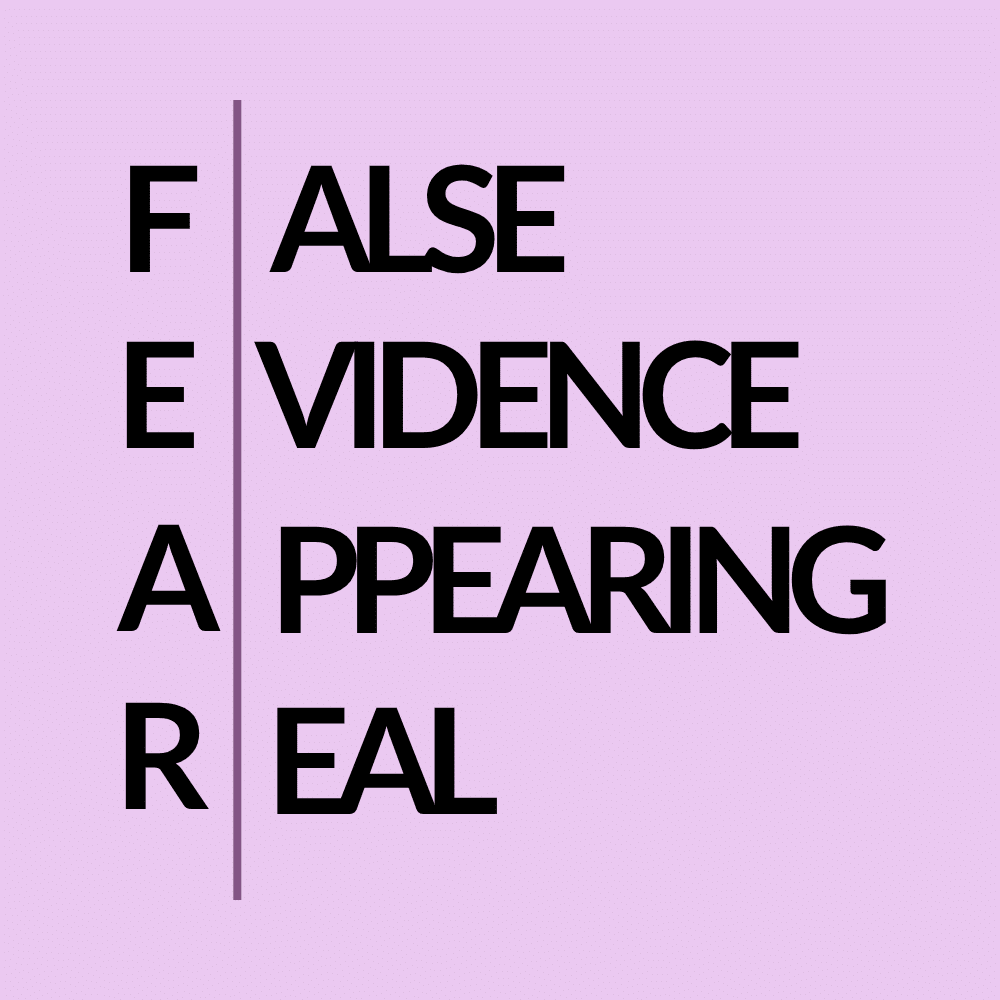
It’s true. But still, the fear of quitting smoking feels very real. And it takes many forms.
For example:
- Saying “later” and waiting for ideal conditions (“I’ll quit when I have less stress”).
- Self-doubt (“I’ll fail because I failed before” or “I am weak”).
- And, often, avoiding thinking about quitting altogether.
Fear isn’t just a feeling, and it doesn’t go away by itself. It’s a rooted response that we have to understand before we can turn its volume down.
That is why I created a 6-part email series to guide you through the fears of quitting smoking, and how to overcome them.
The full series is free (as a thank you for your trust in being on this journey with me). It was made with a lot of care using my background in psychology, and a decade of experience helping smokers like Tim achieve freedom.
To receive this series, click here and I’ll send it to your email.
Whether you want to stop feeling paralyzed or just want to feel a little more confident in yourself, welcome to this 6-part journey. It was made for you!

 We protect your privacy and your information is never shared.