
CBQ METHOD · QUIT SMOKING & VAPING
A Cognitive & Behavioral Science-Based Approach to Quitting Smoking
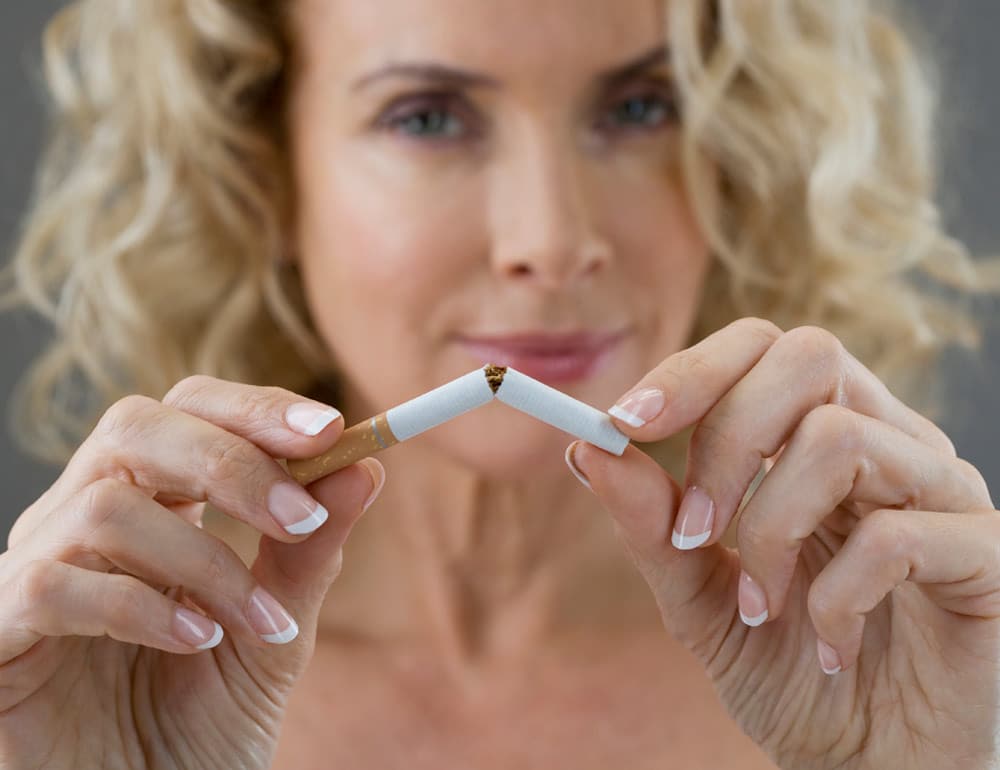
The CBQ Method™ is a 4-stage process based on cognitive behavioral science for lasting behavior change.
The Cognitive Behavioral Quitting (CBQ) Method is designed to change your relationship with smoking and break the habit, so quitting feels natural, not forced.
Why Quitting Often Feels So Hard
Quitting smoking or vaping feels hard because most approaches focus on stopping the habit without addressing what actually causes it, reinforces it, and keeps it in place.
Specifically, there are 3 reasons why quit attempts are hard and short-lived:
Most Quit Attempts Rely on Willpower
Most people try to quit smoking by deciding to “just stop” and pushing themselves through cravings with willpower.
Willpower can help you resist cravings temporarily, but it puts you in a constant tug-of-war with your own mind. This inner battle makes you struggle and feel deprived. Deprivation makes you feel irritated and unhappy.
But most importantly, the urge doesn’t disappear; it just gets suppressed. When stress hits, emotions rise, or life gets difficult, willpower gets depleted.
When that happens, cravings overpower you and lead to relapse. This is not due to personal weakness, but because willpower is finite and cannot create lasting behavior change.
The Mental Dependence Remains Unchanged
Smoking isn’t just about nicotine.
After years of smoking, the mind creates a mental, psychological, and emotional dependence, because it associates smoking with relief, focus, and comfort.
The mental dependence is your relationship with smoking. It’s what makes smoking feel valuable to you and why you crave and miss it:
When you stop smoking, that internal pull often stays exactly the same. The mind still associates cigarettes or vaping with feeling better or just feeling normal.
So quitting feels like giving something up, losing a coping mechanism, or constantly wanting what you’re trying to avoid.
As long as the mental dependence remains unchanged, quitting feels hard and may end in relapse.
The Automatic Response to Triggers Isn’t Broken
When we start smoking or vaping, we gradually associate cigarettes with every aspect of our lives, both the highs and the lows. We train our brain to expect a cigarette when we take a break, socialize, or need a reward.
All these situations quickly become triggers that cue us to smoke on autopilot.
- StressCigarette
- CoffeeCigarette
- Social SituationVaping
- DrivingCigarette
Quitting feels hard when we stop smoking without breaking our associations between our triggers and our smoking response.
We push through life, hoping our triggers will fade away with time. But triggers don’t go away by themselves.
Without breaking our associations, our triggers remain active. So our routine feels incomplete without cigarettes.
Familiar situations can still spark strong urges, making it feel like smoking is always waiting in the background. This can lead to feeling deprived and relapsing, especially, while socializing with smokers, or during stressful moments.
What Needs to Change for Quitting to Feel Natural
For quitting smoking or vaping to feel natural, we have to address the root of the nicotine addiction.
A common misconception is that smoking is a strong physical dependence. While the physical dependence is very real, it’s not strong. Nicotine is a substance with a short half-life. It leaves the body within 1 to 3 days after quitting.
The root of the nicotine addiction is the mental and behavioral dependence: how strongly we believe we want or need smoking (mental), and how deeply smoking is ingrained into our routines (behavioral).
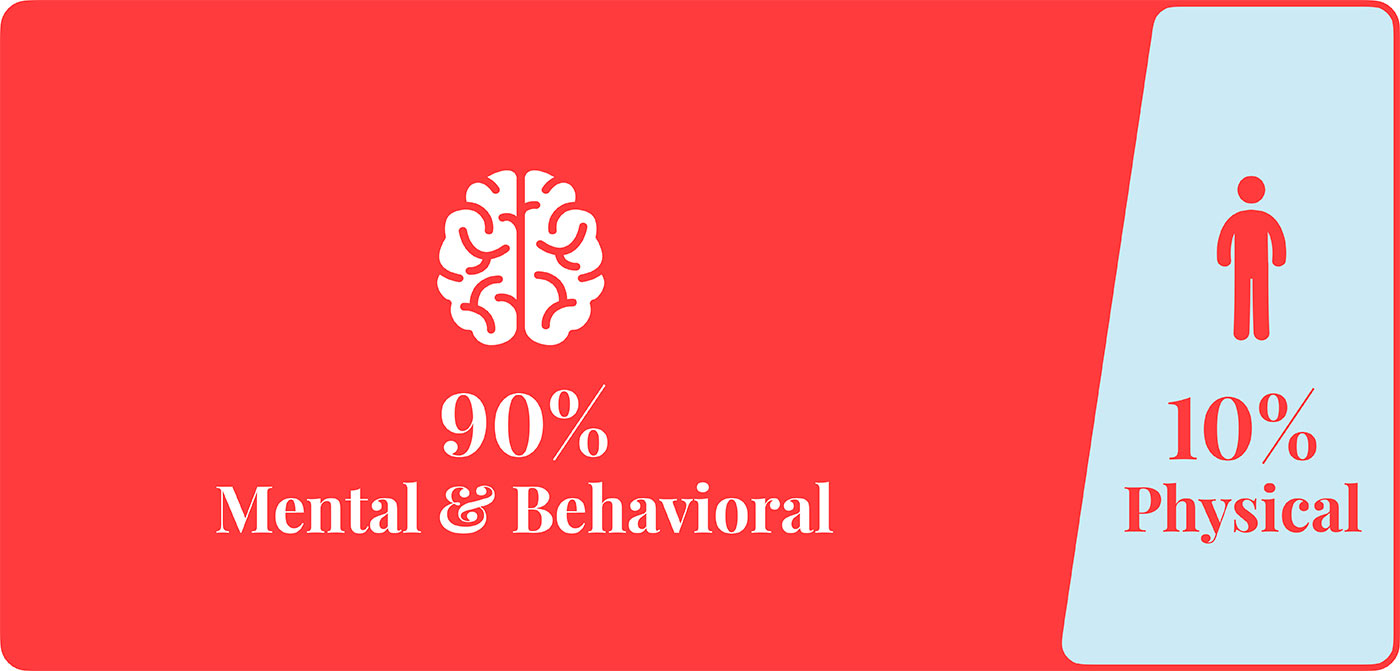
Quitting feels natural when the mental and behavioral dependence is broken. Once you break these ties, smoking no longer feels like something you enjoy or need, and you stop reaching for a cigarette on autopilot.
That’s the difference between forcing yourself not to smoke and becoming a happy non-smoker.
How the CBQ Method Breaks the Root of The Addiction
The CBQ Method works by targeting the root of the addiction: the mental and the behavioral attachment to nicotine.
The Mental Dependence
This is your psychological relationship with smoking or vaping. Over time, smoking stops being something you do, and starts feeling like something you need.
The CBQ Method changes the 3 levels that create your relationship with smoking:
- Emotional associations: When smoking is no longer linked to relief, comfort, or reward, the craving loses its emotional pull. The mind stops treating a cigarette as the answer to discomfort.
- Beliefs: When the core beliefs around smoking change, smoking loses its perceived value. So the mind no longer sees cigarettes as necessary or desirable.
- Identity: When you detach from your smoker’s identity, being smoke-free no longer feels like becoming someone else. You feel like you, just without the cigarettes.
When these 3 levels of the cognitive attachment change, the desire to smoke fades and quitting feels easy.
The Behavioral Dependence
This is the automatic habit that’s deeply ingrained in your routine.
It’s sustained by triggers such as stress, coffee, driving, meals, breaks, alcohol, or social situations. Your triggers can cause you to light up before you’ve even assessed if you really needed a cigarette.
The CBQ Method is designed to break those trigger-response loops. That way, the situations that used to trigger you begin to feel complete without a cigarette.
You can drive, drink coffee, socialize or take a break without feeling off or deprived.
The goal is not to avoid triggers because that means avoiding your life and feeling unhappy. The goal is to neutralize triggers so those moments no longer spark the urge to smoke.
When the behavioral attachment changes, familiar moments stop pulling you back.
How The CBQ Method Approaches Quitting Differently
Most approaches to quitting smoking start the same way:
You stop first, and then rely on willpower or tactics to push through the urge, hoping the desire will fade over time.
Typical Quit Approaches
Quit first
Stop smoking before addressing the underlying psychological and behavioral drivers of the habit.
Rely on willpower
Use constant effort and self-control to resist urges and avoid triggers.
Struggle and relapse
Cravings persist leading to strong feelings of deprivation and relapse.
The CBQ Method takes a different approach
Address what keeps the habit alive
Psychological drivers, emotional patterns, triggers, and automatic routines.
The desire to smoke fades
Cravings and triggers weaken. Smoking feels undesirable and less automatic. Fear of quitting decreases.
Quit smoking
Smoking the final cigarette feels natural, not forced. The new non-smoker can embrace freedom with confidence and without deprivation.
Traditional quit methods focus on stopping the behavior on the surface, even though the need to smoke often stays the same. This turns quitting into a constant effort of pushing through urges.
The CBQ Method works in the opposite order.
By changing the psychological, emotional, and habitual drivers behind smoking before the quit date, the desire weakens, and breaking free feels natural.
The 4 Stages of Quitting Smoking
The CBQ Method breaks the mental and behavioral attachment to smoking in 4 stages.
Each stage builds on the one before it, so detaching from smoking becomes a gradual process. That’s how quitting can feel easy.

Stage 1
Readiness Activation
This stage gets you into the psychological state of readiness, which is the foundation of behavioral change.
All change is state dependent. So starting your preparation in a state of readiness, builds the desire, commitment, and emotional openness needed for change, so you can move toward quitting instead of fighting the process.

Stage 2
Mental Reprogramming
This stage changes how you think and feel about smoking. Our behaviors can change only after changing the beliefs, thought patterns, and identity tied to that behavior.
In this stage, you resolve the fears around quitting and the emotional associations behind smoking so it no longer feels like comfort or part of who you are.

Stage 3
Habit Reversal
This stage changes the automatic pattern.
You break the link between your triggers and the cigarette. So stress, coffee, driving, meals, breaks, or social situations no longer trigger the urge to smoke. You also learn new healthy ways to cope with the ups and downs of life.
At the end of this stage, you smoke your last cigarette or have your last vape.

Stage 4
Nicotine-Free Conditioning
This stage helps your smoke-free life become your new normal.
You condition your new mindset, navigate withdrawal without suffering, and go through the adjustment period after nicotine. That way, you don’t just stop smoking, you feel secure in your life as a non-smoker.
Who the CBQ Method Is For
The CBQ Method was developed for people who want to quit smoking or vaping and:

Have struggled to quit before and nothing worked for them.
Feel too addicted to stop and experience strong cravings.
Enjoy smoking, or feel they need it for relief, focus, and comfort.
Their routine revolves around smoking, from breaks to social situations, and they can’t imagine life without cigarettes.
Are looking for a structured approach grounded in science, not pressure or scare tactics.
Have blamed themselves for lacking willpower and are open to understanding the deeper reasons why smoking has a strong hold over them.
Trusted by Smokers, Vapers, & Healthcare Professionals


"Best Overall Method to Quit Smoking"


“This method is very good.”
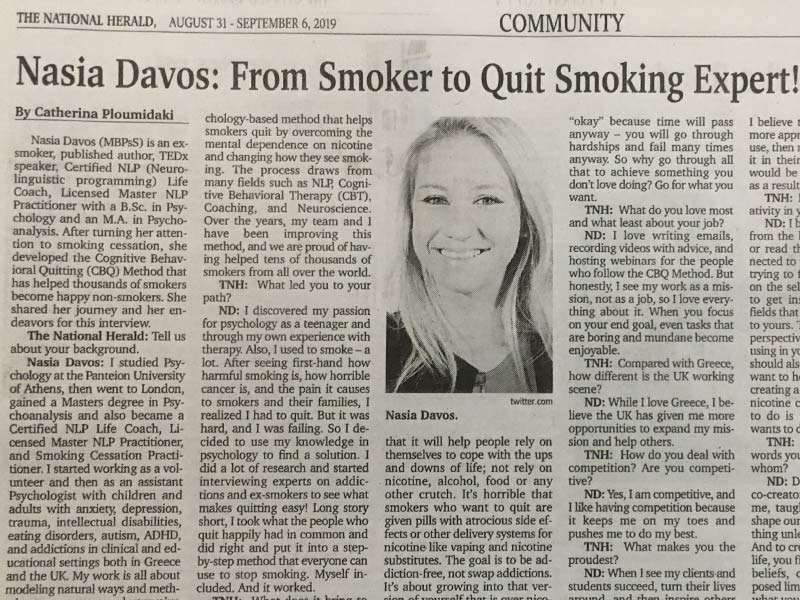
– Dr. Behrakis (MD, PhD, Mc Gill, FCCP) Pulmonologist-Intensivist, President of the Scientific Committee of European Network for Smoking and Tobacco Prevention, member of the Board of Regents of the American College of Chest Physicians (ACCP) and former Adjunct Professor at Harvard.

“The CBQ method is effective and has made a difference in my patients and people all over the world. I highly recommend Nasia Davos.”
– Dr. Zoe Vlamaki (MD,FRCS) Consultant General and Breast Surgeon at NHS Trust UK, Representative of Global Greek Doctors Institute in the UK (G.G.D.I), certified by the American Board of Surgery, professional member of the Royal College of Surgeons of England, the Society of Laparoendoscopic Surgeons, and the American Society for Laser Medicine and Surgery.
Take the First Step Toward Nicotine Freedom
Get the free CBQ Method Starter Guide to quitting smoking and vaping. The starter guide includes the foundational video and the PDF guide to help you map your quit smoking journey with the 4 stages of the CBQ Method.
The CBQ Starter Guide will be sent to your email
Take the First Step Toward Nicotine Freedom

Get the free CBQ Method Starter Guide to quitting smoking and vaping. The starter guide includes the foundational video and the PDF guide to help you map your quit smoking journey with the 4 stages of the CBQ Method.
The CBQ Starter Guide will be sent to your email
 We protect your privacy and your information is never shared.